
Ongoing Research
NOTE: PDFs of select articles are in the process of being uploaded.
Research Agendas
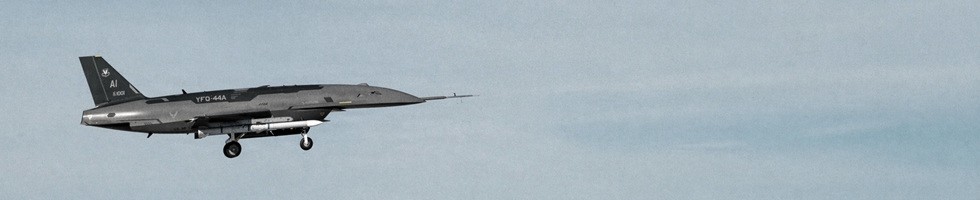
Airpower, Emerging Military Technology, and Coercion
How do states use airpower, drones, and other standoff capabilities to coerce adversaries? This research program examines the development, deployment, and effectiveness of military aviation and unmanned aerial vehicles across interstate disputes, civil wars, and peacekeeping operations.
Publications and working papers:
-
"Appetite for Revision: Military Drones and Interstate Disputes." Under review, 2025.
Abstract: Why do states initiate armed coercion short of war? Existing research emphasizes the stakes of disputes, yet many forceful militarized interstate disputes occur outside the highest-salience settings. I develop a supply-side theory in which military technologies shape this margin by changing the effective price of coercion: the expected material, human, political, and retaliatory costs of using force relative to the coercive leverage force is expected to generate. Technologies that lower this price while preserving sufficient leverage to move targets expand the range of disputes states are willing to militarize. I test this argument using new data on combat drone access and forceful MID initiation from 1992 to 2016. States with combat drones initiate forceful MIDs more often. This effect attenuates when targets possess advanced air defenses and is fully offset when targets possess combat drones of their own. The effect also extends beyond classic high-salience issue settings. The findings show how the cost profile of available coercive instruments broadens the issue frontier of interstate coercion.
-
"Flying for Peace? UN Aviation Units and Local Peacekeeping Effectiveness," with Deniz Cil. Working paper, 2025.
Abstract: How do specific peacekeeping capabilities reduce violence during ongoing civil wars? Existing research shows that UN deployments reduce conflict intensity, but the mechanisms remain contested and the role of individual capabilities is poorly understood. We argue that helicopter units act as both “presence multipliers” and “force multipliers.” As presence multipliers, helicopters expand surveillance and rapid-response capacity, deterring attacks and civilian victimization. As force multipliers, they enhance the coercive capacity of ground forces, increasing rebel battlefield losses. We test these propositions using Geo-PKO, ACLED, and UCDP-GED data for UN missions from 1997–2024 at the grid-month level. Fixed-effects logistic regression models show that proximity to helicopter-equipped bases reduces rebel attacks, increases rebel and state battle deaths, and lowers rebel one-sided violence. Infantry proximity, by contrast, is associated with more rebel attacks. Interaction models show that airpower’s effects on attacks and deaths are amplified when infantry is nearby, consistent with force multiplication mechanism, while its effect on one-sided violence is independent of infantry proximity, consistent with presence multiplication mechanism. These findings highlight the distinct roles airpower plays in combat and civilian protection.
- “Offshore Coercion: Deterring and Compelling Nonstate Actors using Airpower.” Working paper, 2025.
- “Reassessing the Causes of Military UAV Development using the New ARM-UAV Dataset,” with Megan Lloyd. Working paper, 2025.
- “Making Use of History: The Effects of US Use of Force Short of War,” with Daniel Tuke, Paul Huth, and Melanie Sisson. In Military Coercion and US Foreign Policy, 2020.
- “Gray Zone Deterrence: Success and Failure in Interstate Disputes Short of Conventional War,” with Paul Huth. Technical reports for DARPA, DoD, 2017-2018.
Funding:
- PI, “The Effectiveness of Drones, Air Power, and Modern Coercion,” National Science Foundation, 2022-2025 ($418,437). Grant No. 2214999.
Rebel Behavior, Military Learning, and War Outcomes
What explains variation in how rebel and states fight, fund themselves, and control territory, and how do these factors shape war outcomes? Under what conditions do combatants adapt their resourcing and military strategies during conflict? This research program develops and tests theories of rebel sanctuary, resource extraction, and military adaptation in civil war.
Publications and working papers:
- “A Sanctuary-centric Theory of Civil War Outcomes,” with Paul Huth and Mark Lichbach. Under review.
- “The Tyranny of Supply: Natural Resources and Rebel Territorial Control,” with Michael Findley, Kyosuke Kikuta, and James Walsh. International Studies Quarterly, 2024.
- “The Geography of Military Activity and Battlefield Success,” with Paul Huth. Working paper, 2025.
- “Soft Money Insurgency: The Determinants of Rebel Funding Strategies,” with James Walsh and Paul Huth. Working paper, 2024.
- “Rebel and State Armed Force Size in Internal Conflicts,” with Paul Huth. In Peace and Conflict 2017, Routledge.
Funding:
- Co-PI, “Military Adaptation and War Termination,” Department of Defense Minerva Research Initiative, 2025-2028 ($2,499,000). [Minerva Research Initiative canceled in 2025]
- Co-PI, “Soldiers and Sanctuaries: How Armed Non-State Actors Build and Maintain Their Coercive Power,” Smith Richardson Foundation, 2017-2019 ($150,000).
Cultural Heritage and Armed Conflict
Why do combatants damage cultural heritage sites during war, what impact does targeting have on vulnerable civilian populations, and how can such damage be detected and documented? This research program combines remote sensing methods with theories of political violence to study the causes and patterns of cultural heritage destruction.
Publications and working papers:
- “Attacks on History: The Causes of Cultural Heritage Damage During Armed Conflict,” with Deniz Cil, Paul K. Huth, and Brian I. Daniels. Nationalism and Ethnic Politics, 2025.
- “Detecting Damage to Cultural Heritage during Armed Conflict Using the Case of Ukraine,” with Deniz Cil, Hayden F. Bassett, et al. Nationalism and Ethnic Politics, 2025.
- “Identification of Deliberate Building Targeting During War: Evidence from Donetsk Oblast,” with Deniz Cil, Hayden Bassett, and Brian I. Daniels. Tearline, 2024.
- “Protecting History: Cultural Heritage Damage and the Production of Violence.” Working paper, 2022.
- “Damage to Cultural Heritage Sites,” with Deniz Cil and Hayden Bassett. Technical report series for CSO, Department of State, 2022-2023.
Funding:
- PI, “Conflict Observatory,” Smithsonian Institution and Department of State, 2022-2023 ($70,958).
Conflict, Displacement, and Post-Conflict Governance
How do armed conflicts shape civilian displacement, return decisions, and attitudes toward post-conflict governance? This research program uses survey data from Iraq and remote sensing data from Ukraine to study the civilian consequences of political violence.
Publications and working papers:
- “Power-sharing versus Power-grabbing in the Aftermath of Civil War: Evidence from Public Opinion in Mosul, Iraq,” with Sam Whitt, Jonathan Hall, Vera Miranova, Paul Huth, and James Walsh. Security Studies, 2024.
- “Population Displacement and Return in Ukraine,” with Deniz Cil, Andrew Marx, and Forrest Pound. Conflict Observatory, Department of State, 2022.
- “The Causes of Displacement: Evidence from Ukraine,” with Deniz Cil and Andrew Marx. Working paper, 2024.
- “Ethnic Cleansing, Battlefield Control, and Collateral Damage: The Dynamics of Population Movement in Eastern Ukraine,” with Deniz Cil. Working paper, 2023.
- “Information, Agency, and Return Intentions: Evidence from Displacement following the Battle for Mosul,” with James Walsh, Jonathan Hall, and Paul Huth. Working paper, 2021.
- “Local Ownership of Aid: Reconstruction Assistance, Effective Counterparties, and Insurgent Violence,” with Deniz Cil. Working paper, 2021.
Funding:
- PI, “Conflict Observatory,” Smithsonian Institution and Department of State, 2022-2023 ($70,958).
- “Displace, Return, and Reconstruct: Population Movement and Resilience to Instability,” Minerva Research Initiative, 2018-2021 ($1,500,000).